
LGAC 2.- OPTIMIZACIÓN GEOMÉTRICA
En la práctica de diseño de componentes mecánicos se analizan los aspectos funcionales del producto, se dimensiona y calculan los esfuerzos debidos a las cargas que soportarán. Además se analizan los aspectos del proceso de manufactura que influyen directamente con la forma última del producto. Es deseable reducir costos. El desarrollo vertiginoso de productos obliga al ingeniero en diseño a utilizar sistemas computacionales que le permitan analizar las posibles zonas críticas que presenten elevaciones de esfuerzo de piezas antes de que éstas sean manufacturadas. Resulta deseable que las geometrías sean optimizadas bajo criterios de minimización de los esfuerzos máximos y poder así garantizar la vida útil del componente. Esto es posible desde la fase de análisis y diseño por medio de técnicas como las de diseño mecánico, elemento finito, la aplicación de criterios biológicos, entre otras.
GEOMETRÍAS PARA DISEÑO DE PRODUCTOS MECÁNICOS
El uso de la tecnología en ingeniería juega un rol muy importante en el diseño de partes mecánicas. Los programas de diseño por computadora, CAD (del inglés Computer Aided Design), permiten generar geometrías en tres dimensiones, que pueden ser utilizadas para diversos análisis, y con ello lograr un diseño óptimo que cumpla con las especificaciones del producto.
En los programas de diseño por computadora los objetos se modelan mediante primitivas geométricas como son el punto, la recta, la curva, la esfera, etc. Aunque existen diversos modos de manejo matemático de dichas primitivas, cada programa de diseño las maneja de manera particular para facilitar las operaciones internas. Un modelo geométrico es una idealización de una parte real cuyo comportamiento puede ser descrito por ecuaciones matemáticas. En un modelo 3D se pueden utilizar las diferentes primitivas geométricas de construcción de modelos tridimensionales: el cubo, el cilindro, el cono y la esfera; estas primitivas se pueden escalar, rotar o trasladar en el espacio; también se utilizan operaciones que permiten su interacción: unión, diferencia o intersección de secciones, facilitando así el diseño de geometrías más complejas. Con toda la información que contiene un modelo geométrico, éste puede ser usado para fabricar su prototipo rápido, hacer un análisis de colisiones, de esfuerzos estáticos, de cinemática de eslabones y su manufactura en serie.
 |
 |
 |
 |
|
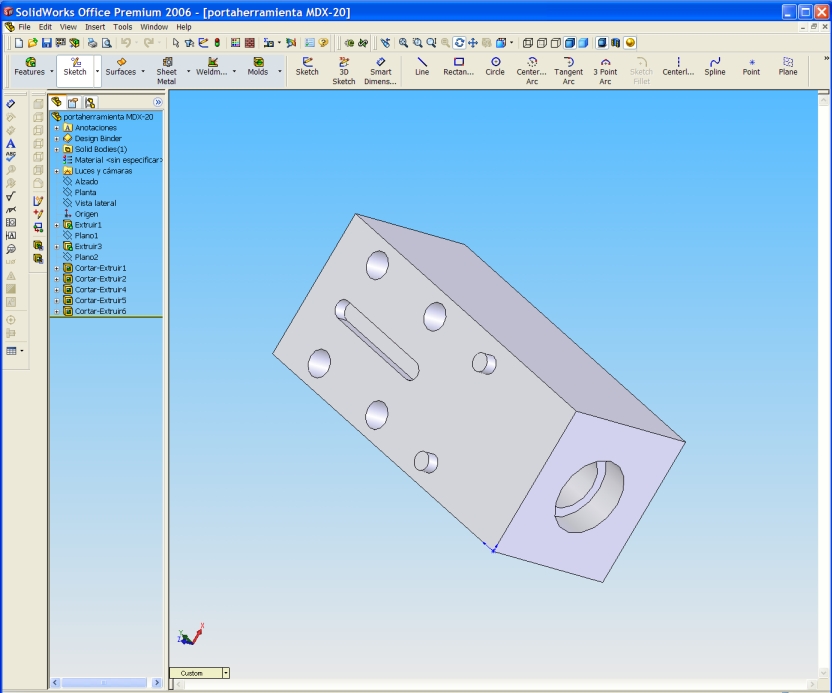
Porta herramienta MDX-20.
|
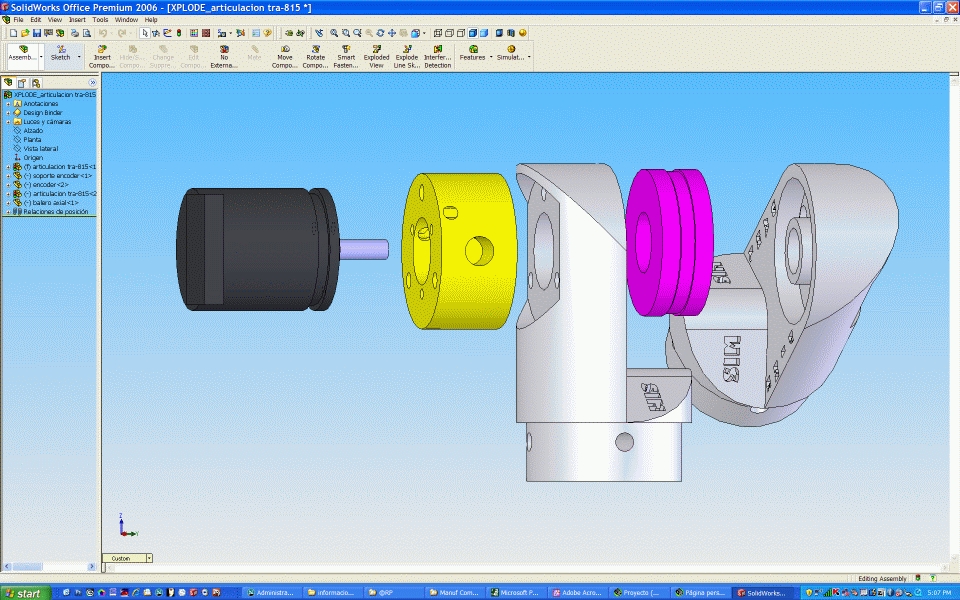
Articulación con encoder del proyecto "Máquina
de medición" PARO.
|
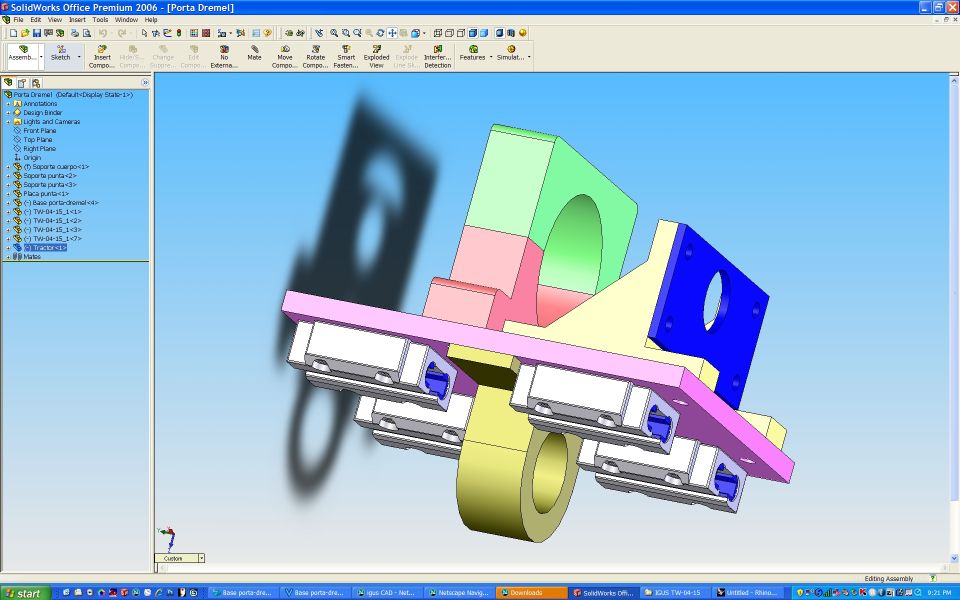
Porta Dremel con guias IGUS y partes maquinadas en 2D.
|
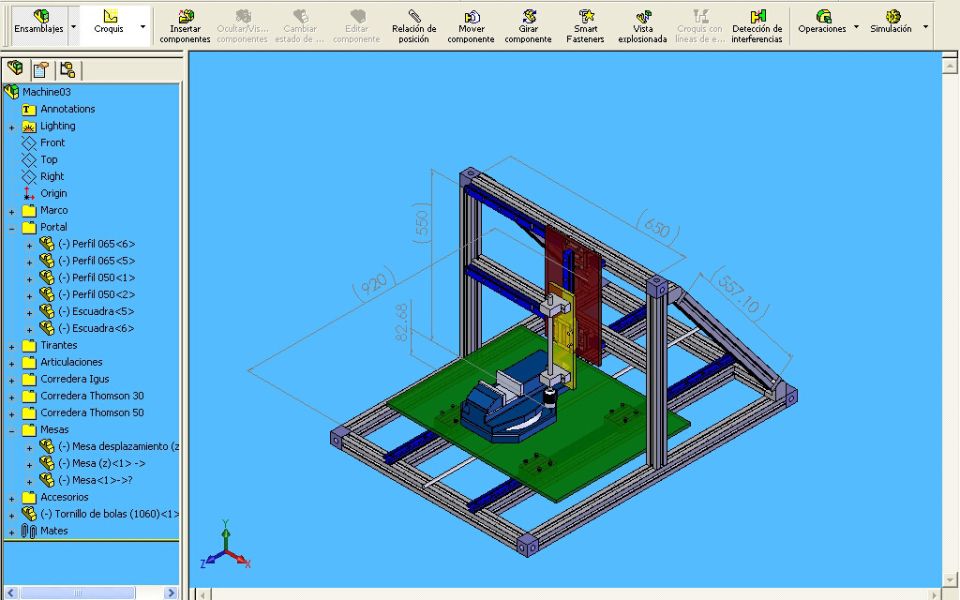
Maquina-Herramienta v3
|
TOPOLOGICAL MESH MODELING
Ergun Akleman
Extracto del libro "Topological Mesh Modeling":
One of the most exciting aspects of shape modeling and sculpting is the development of new algorithms and methods to create unusual, interesting and aesthetically pleasing shapes. Recent advances in computer graphics, shape modeling and mathematics help the imagination of contemporary mathematicians, artists and architects to design new and unusual 3D forms [13].
One of the most notable artists of the last century, Escher, frequently applied mathematical concepts to create drawings of unusual 3D forms [170]. With the advance of computer graphics, many artists have begun to use mathematics as a tool to create revolutionary forms of artworks. There currently exists many contemporary artists such as George Hart [10], Helaman Ferguson [9], Bathseba Grossman [11], Brent Collins and Carlo S´equin [22] who successfully combines art and mathematics to create unusual sculptures. These mathematical sculptors, who have a very noticeable presence in today’s art scene, develop their own methods to model, prototype and fabricate an extraordinary variety of shapes. Unusual shapes are especially interesting for architectural design. Interestingly shaped architectural structures are symbols of cities, regions, states, and even countries. In fact, recent advances in computer graphics and shape modeling help the imagination of contemporary architects to design new forms [13]. One most notable contemporary example of interestingly shaped buildings that have become symbols is Frank Gehry’s Guggenheim Museum. The Museum, with its stunning titanium-clad forms, has been credited with vitalizing an entire city and region of Spain.
Poygonal Modeling
Polygonal modeling is the most widely used modeling approach in computer graphics applications. With the advent of subdivision surfaces, most users have converted back to polygonal modeling to create control surfaces for subdivision schemes. It is interesting to note that this popularity of polygonal modeling happened despite the limited tools provided by commercial modeling systems (The users find effective uses of existing tools and share their experiences with other users by publishing trade articles and books).
We believe that the popularity of polygonal modeling comes from one of its under-appreciated advantages over other modeling approaches. If the polygons are not triangles or quadrilaterals, the faces are not geometrically well-defined. With geometrically ill-defined faces, self-intersection becomes meaningless. So, any commercial system that allows general polygons does not check self-intersection and avoids the cost of self-intersection computation which can considerably slow down the application during interactive modeling.
The omission of automatic self-intersection avoidance is typically not of concern to most users, since they can easily avoid self-intersection manually. Given a choice users usually prefer interactivity and higher speed in their applications. On the other hand, when users become more advanced, their main complaint becomes the limitations of the tools. For instance, opening a hole or adding a handle can require huge amount of manual work. Therefore, modeling a very complicated shape with huge number of holes and handles can be an uphill task even for experienced users.
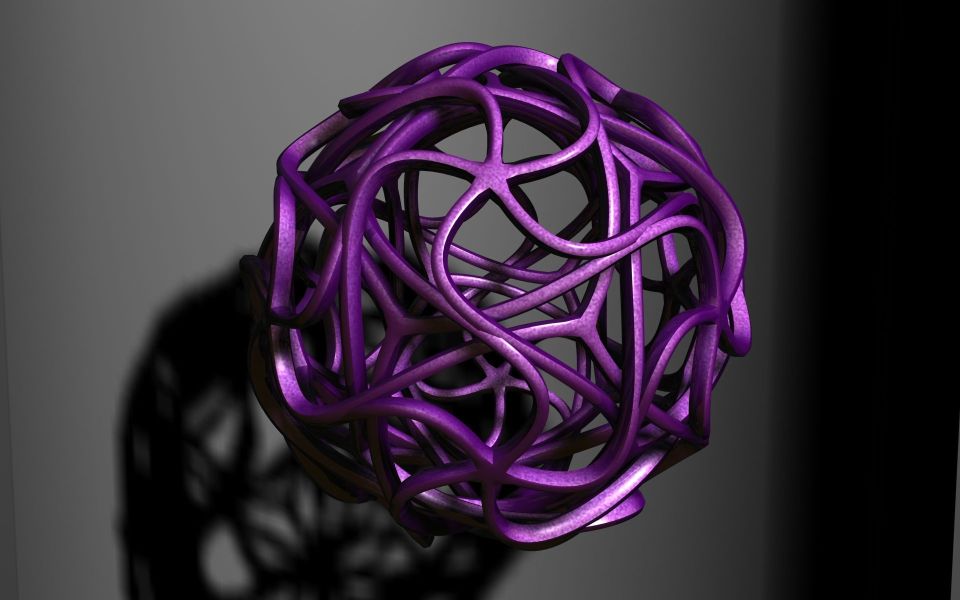
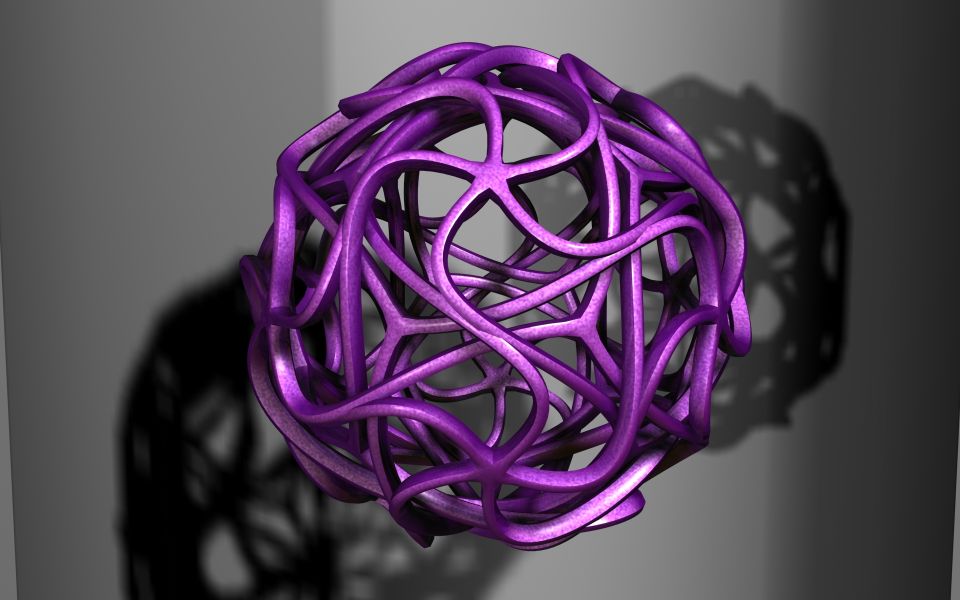
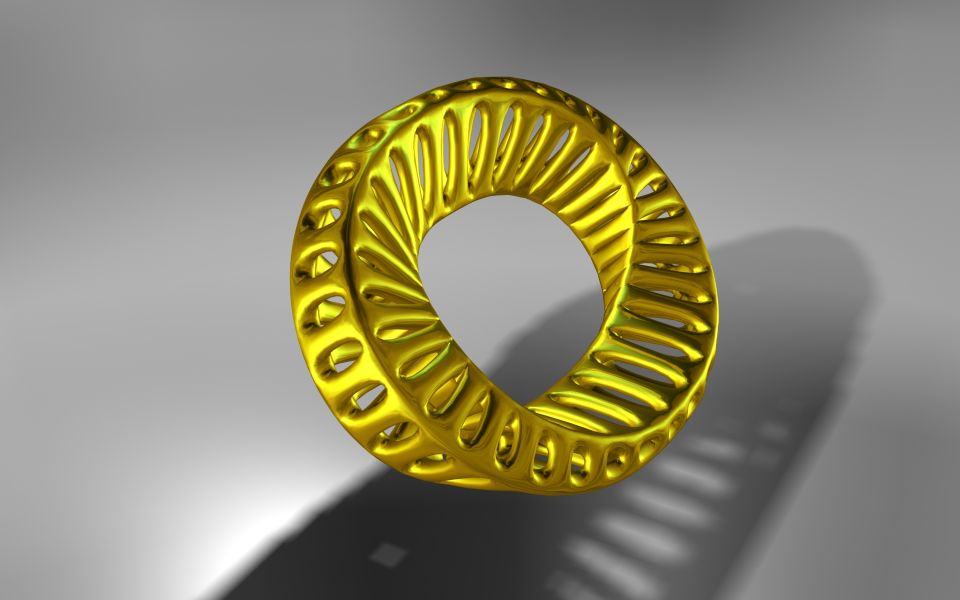
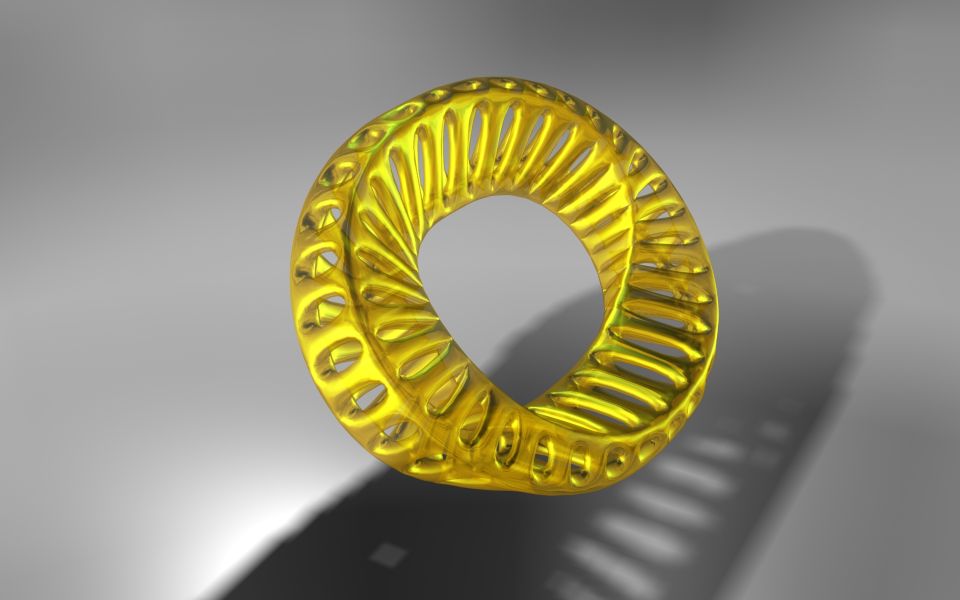
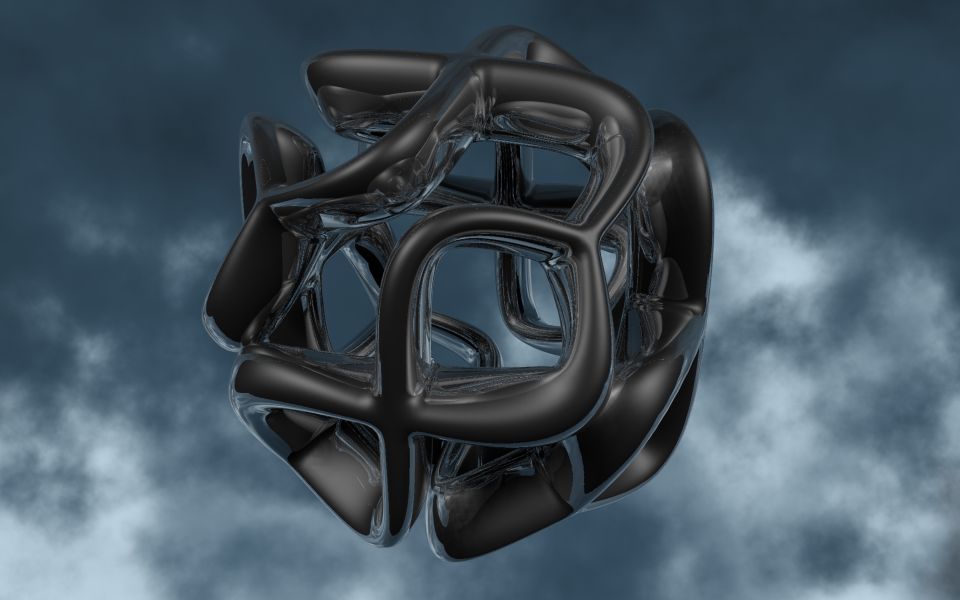
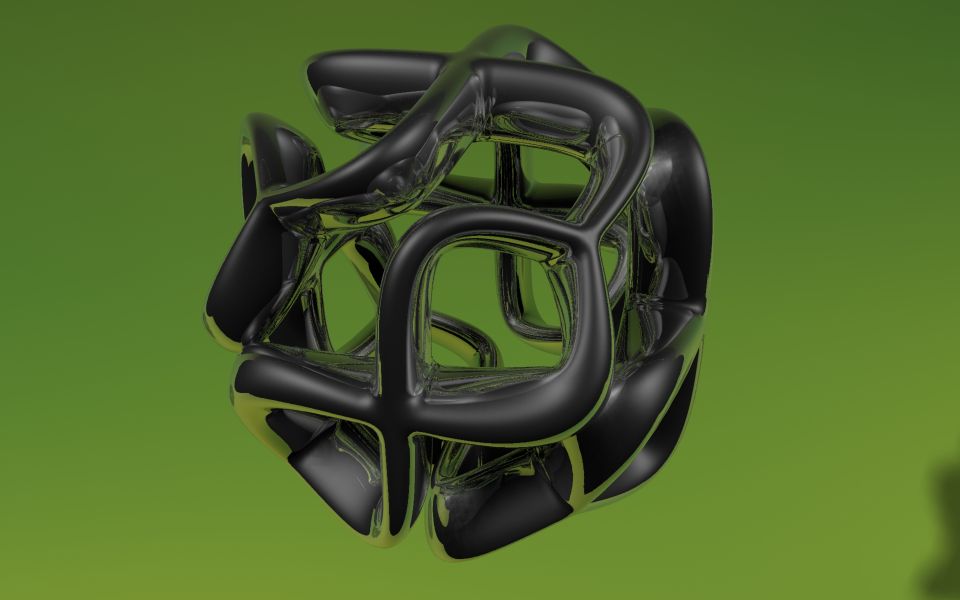
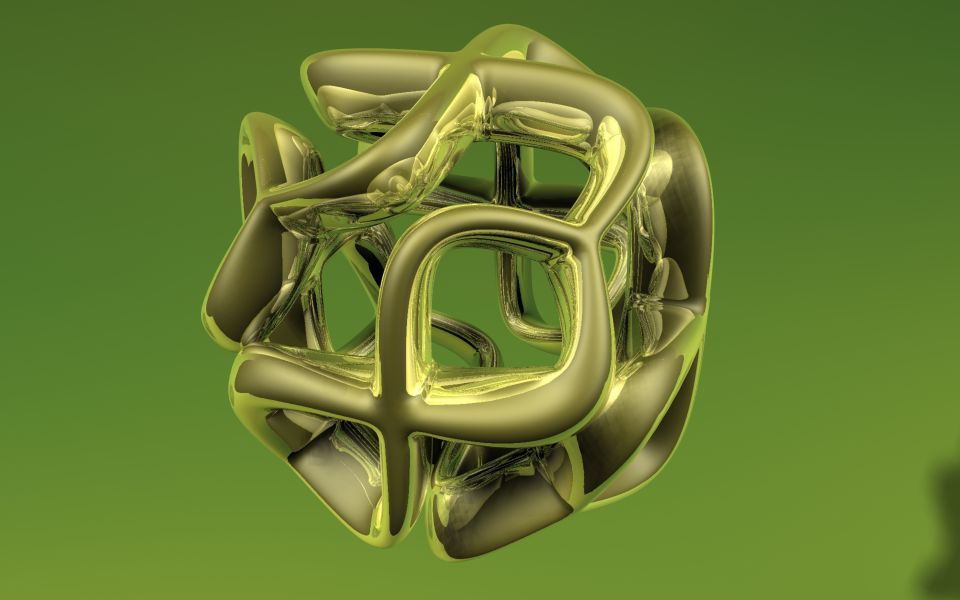
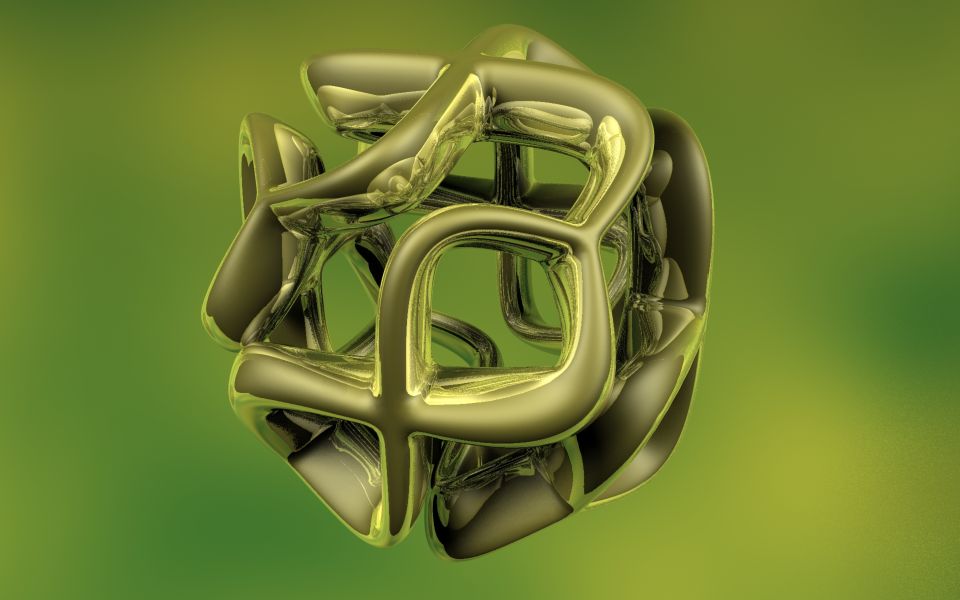
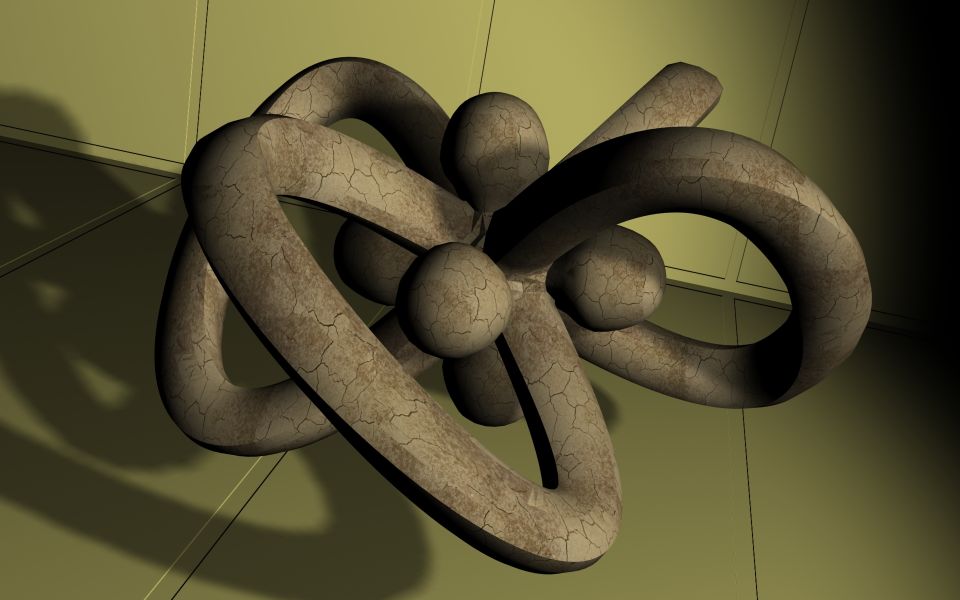
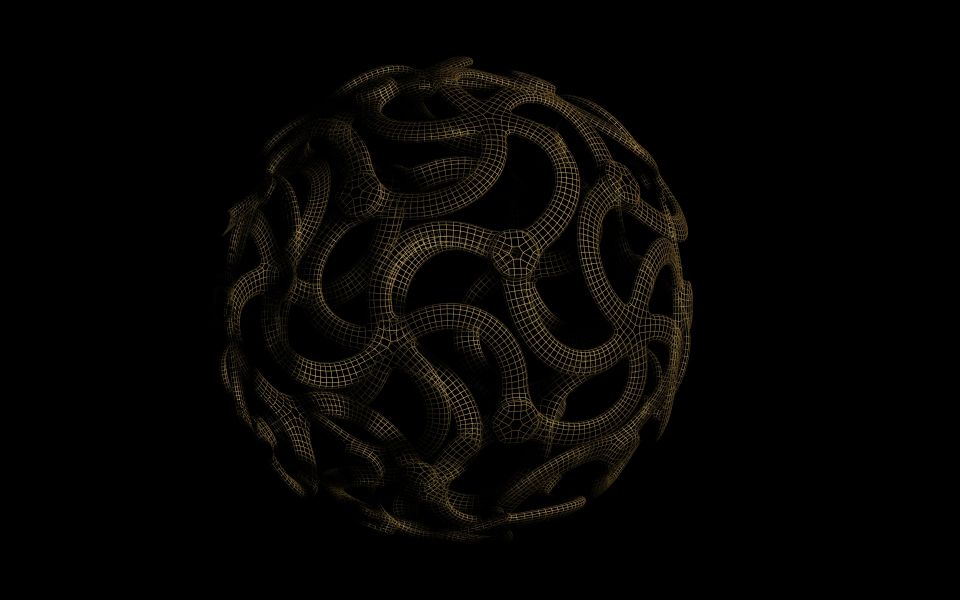
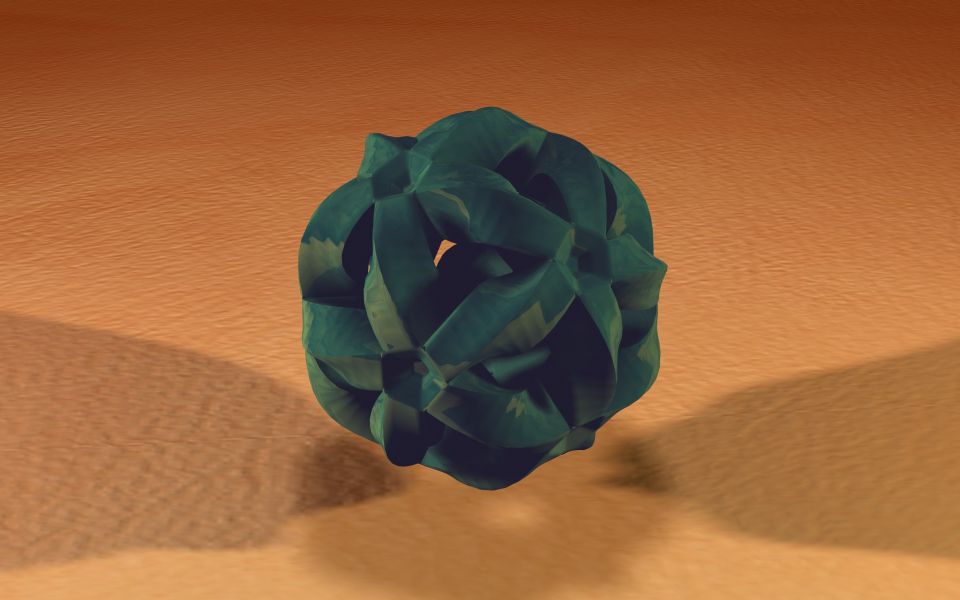
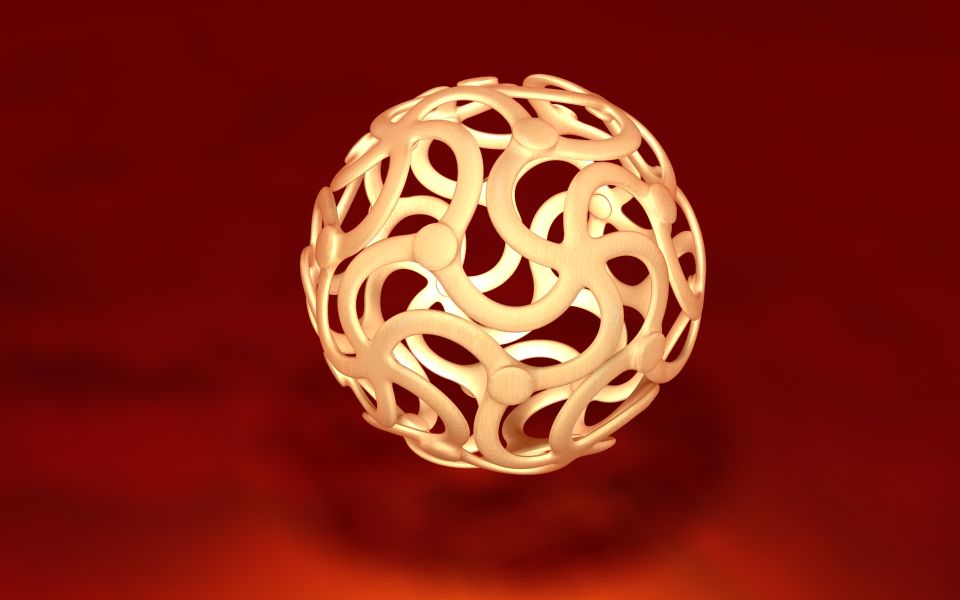
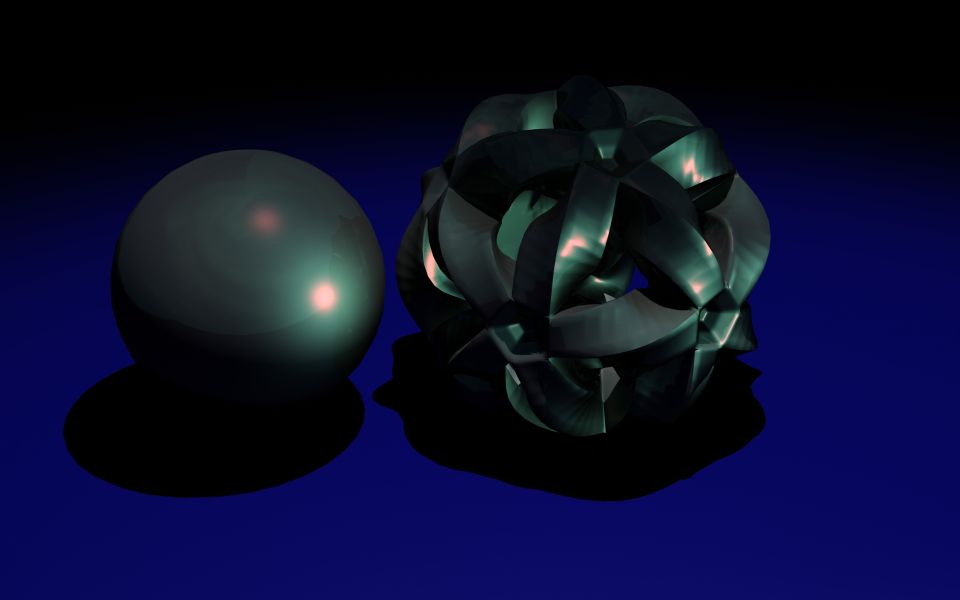
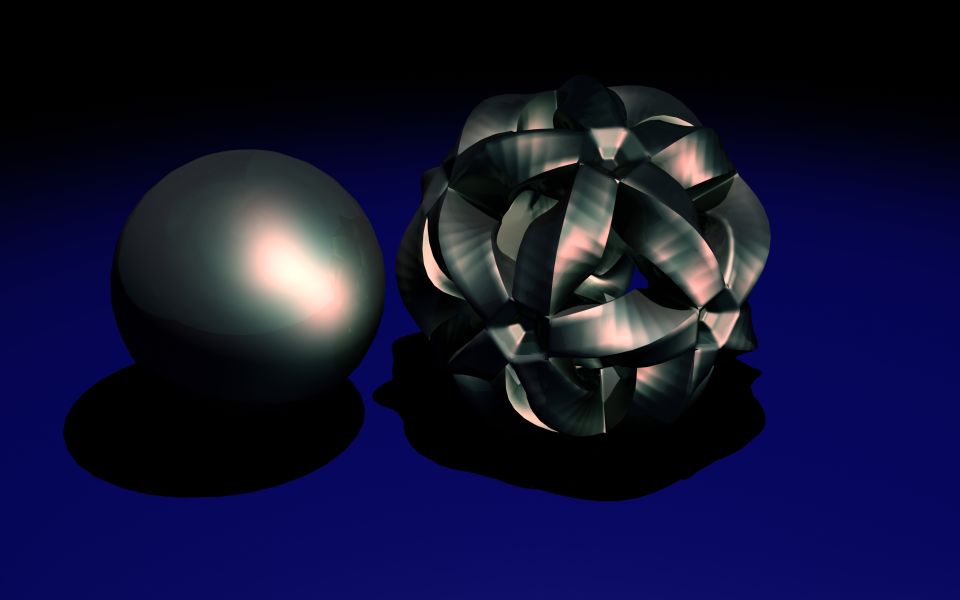
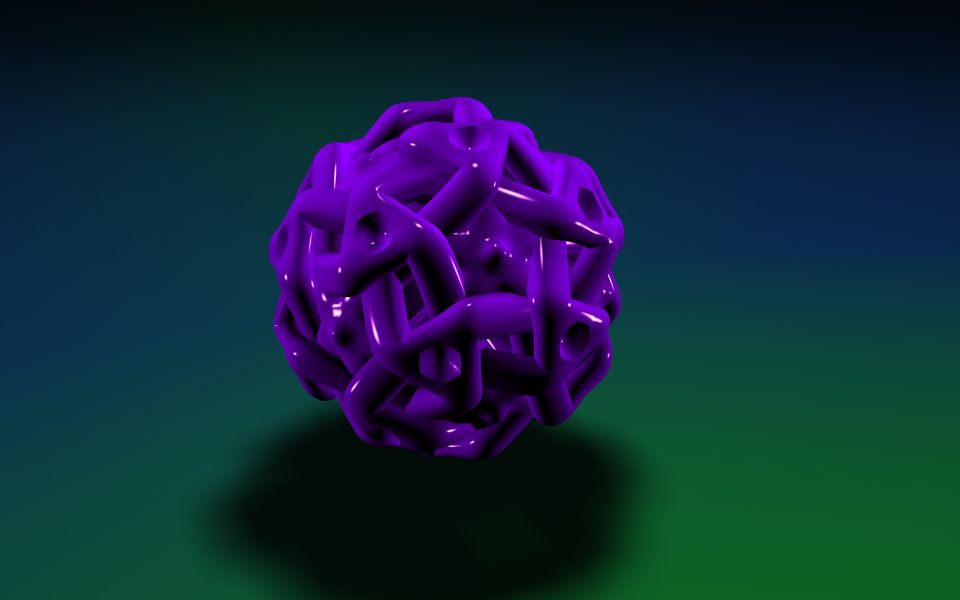
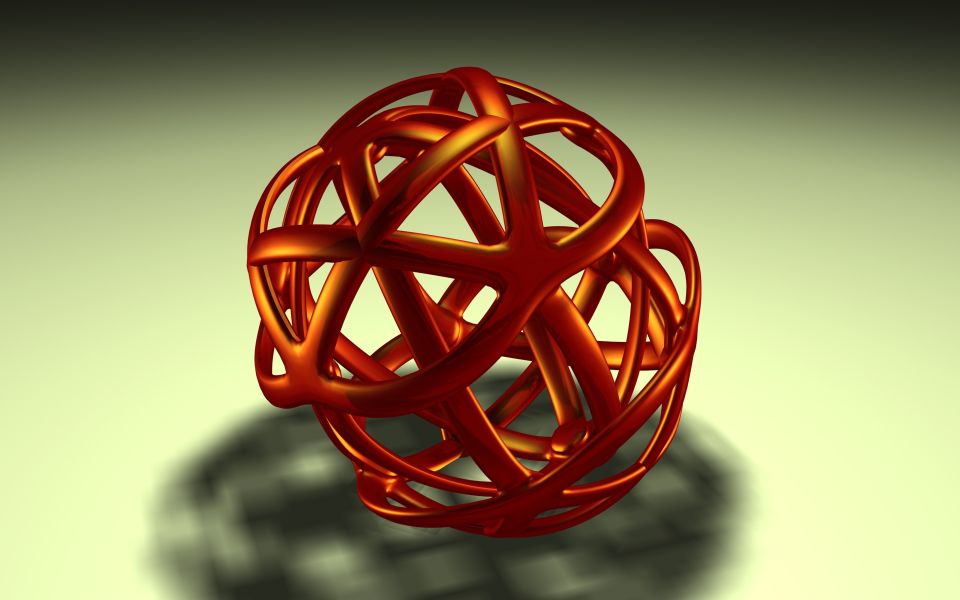
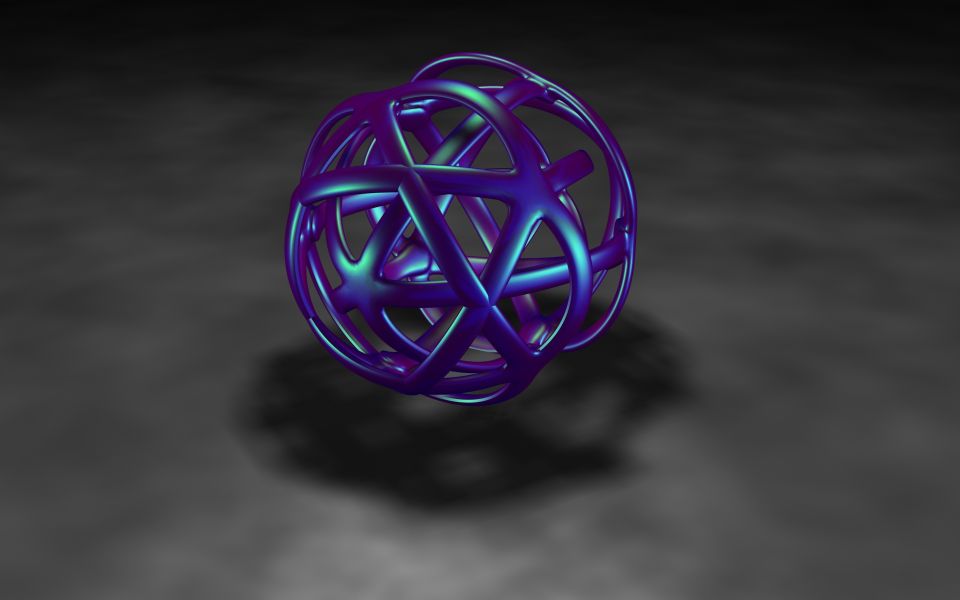
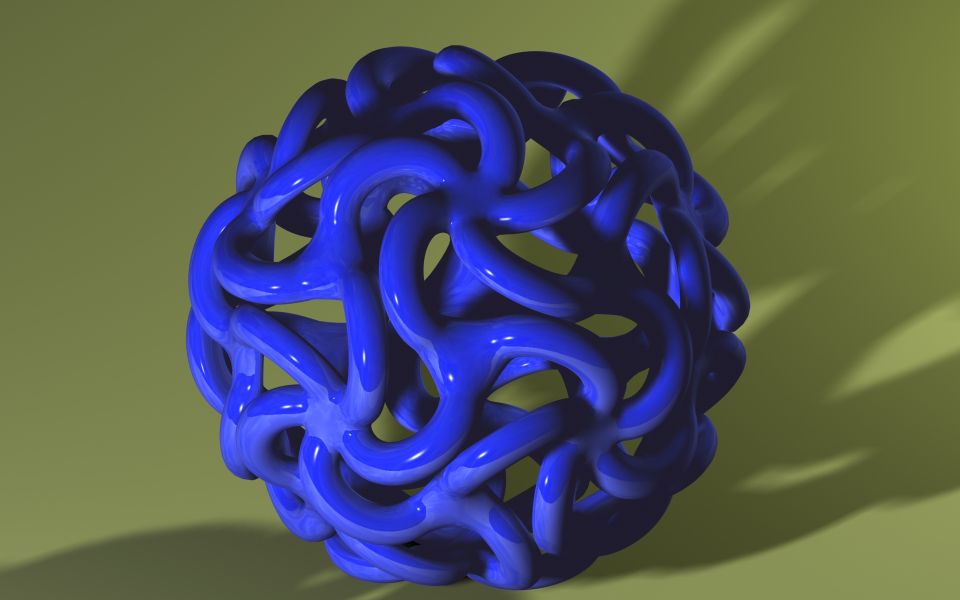
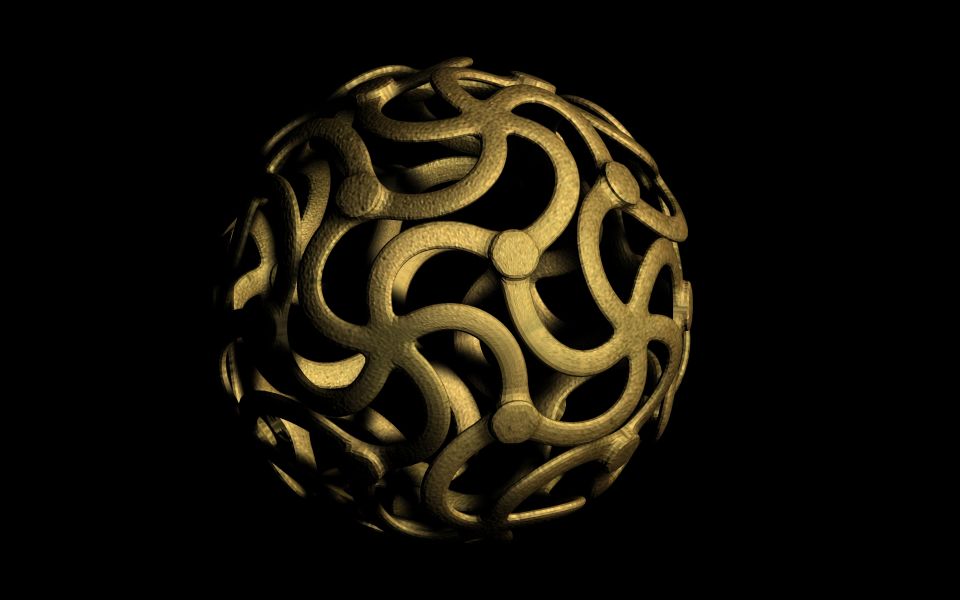
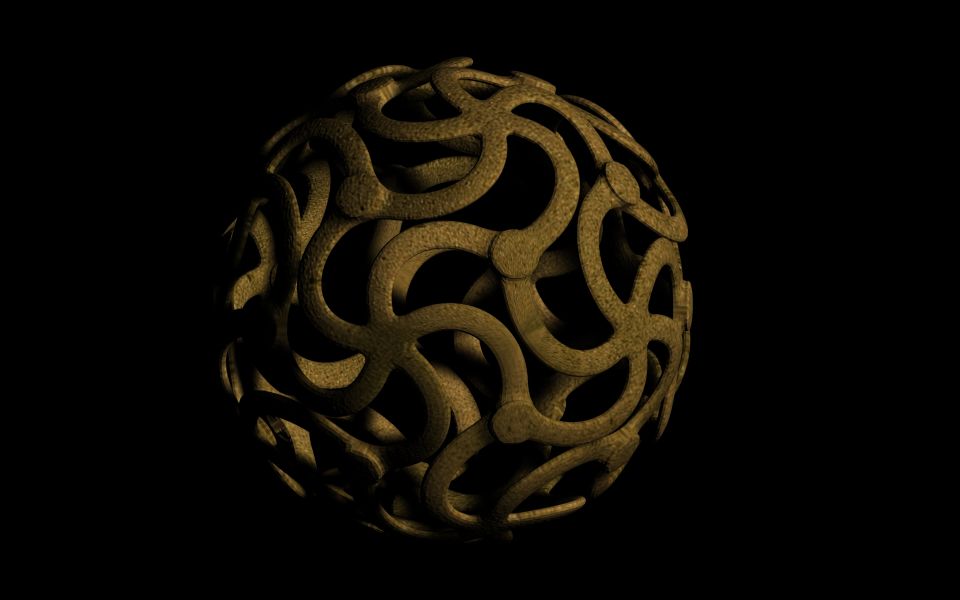
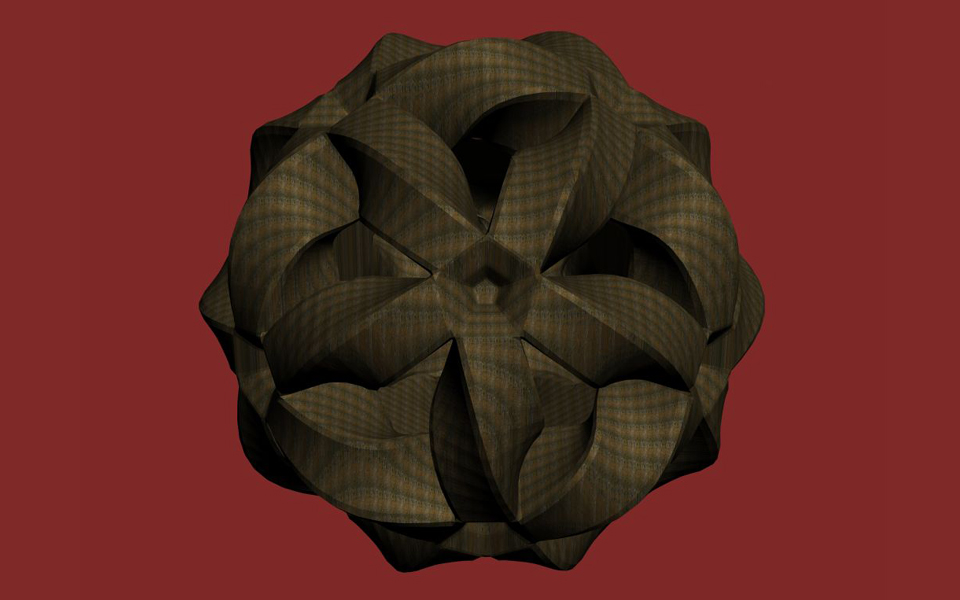
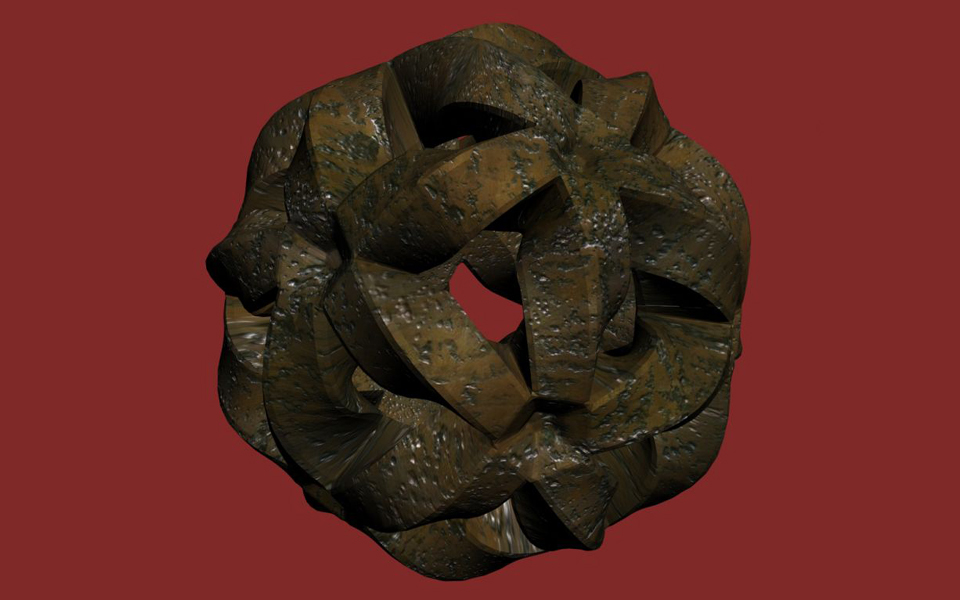
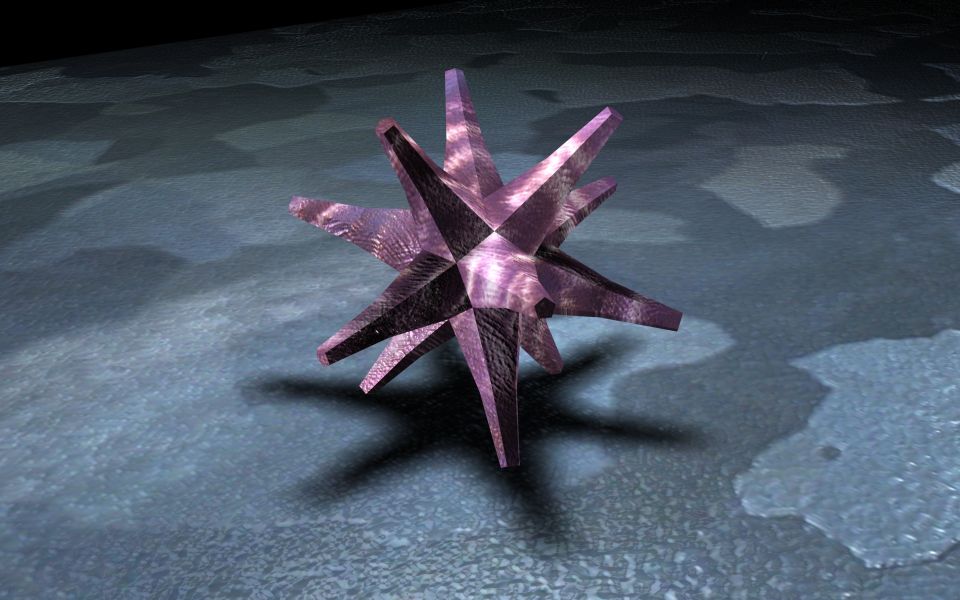
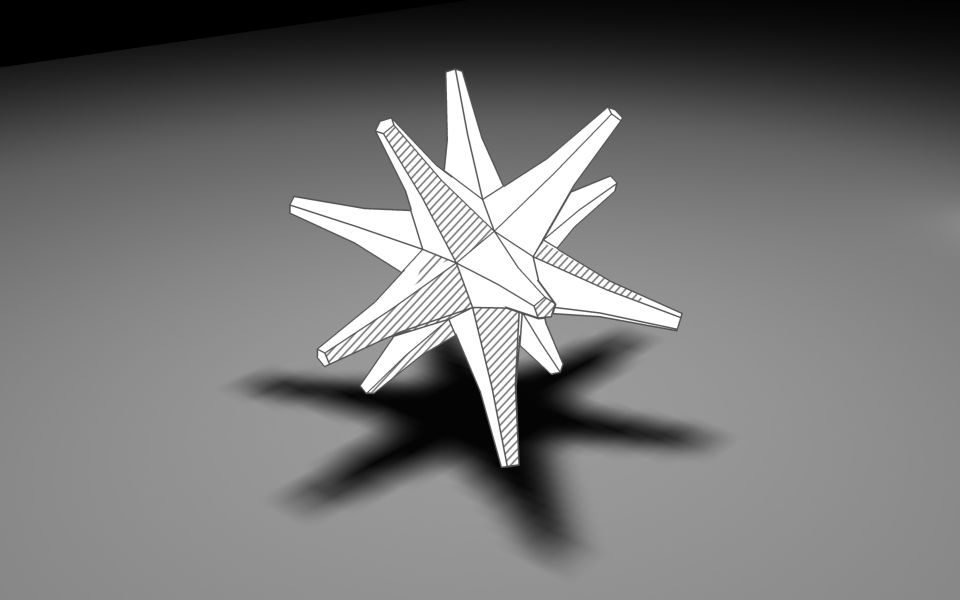
Las siguientes geometrías fueron generadas con TopMod de Ergun Akleman y rendereadas con 3DMAX:
 |
 |
 |
 |
 |
 |
 |
 |
 |
 |
 |
 |
 |
 |
 |
 |
 |
 |
 |
 |
 |
 |
 |
 |
Ver también: Keizo Ushio
SCHERK-COLLINS SCULPTURE GENERATOR
Extracto de la página personal de Carlo Séquin UC Berkeley:
Computer Graphics, Art, Math, Geometry, and Abstract Sculpture are closely related. In the activities below we are trying to transcend the boundaries between these fields.
A computer program has been developed to visualize different configurations of such saddle rings with different number of holes and different amounts of twists. Experimenting with different values for the parameters of such a virtual sculpture can be done at interactive speeds and can save weeks of hard labor needed to build physical prototypes. It also may result in more optimized solutions, and it allows to find configurations that one would not likely dare to explore if the prototypes had to be built manually from physical matter.
An intellectual collaboration with Brent Collins has already
resulted in a couple of intriguing new wood sculptures. A direct collaboration
on more complex sculptures is now under way since the prototyping program has
recently been enhanced to deliver construction blueprints in the form of slices
through the sculpture geometry. Brent Collins is a professional artist living
in Gower, MO, who has been carving abstract geometrical structures from solid
wood blocks or from laminated assemblies. any of his sculptures comprise minimal
surfaces which form an intricate composition of tunnels and saddles. Carlo Séquin
is a professor at U.C. Berkeley, teaching computer graphics, geometric modeling,
and computer aided design. Since 1995 he has been collaborating with Collins
in the conception and design of intricate geometrical shapes that expand the
original work of Collins. He has developed several procedural generator programs
that recreate some of the shapes conceived by Collins and can expand the basic
concept in several possible directions. His interactive "sculpture generator"
allows a quick perusal of some domain of the configuration space, and an optimization
of a given design along the axes of several parameters. Shapes of high artistic
merits can then be sliced into 1-inch slabs and a corresponding set of cross
sections printed out. Brent Collins uses these templates to precut a set of
wood boards and to preassemble a rough shape from which the final sculpture
is then carved. In this way, the intuitive genius of the artist can be amplified
by a computer tool that assists with the visualization and faithful reproduction
of complex geometrical shapes.
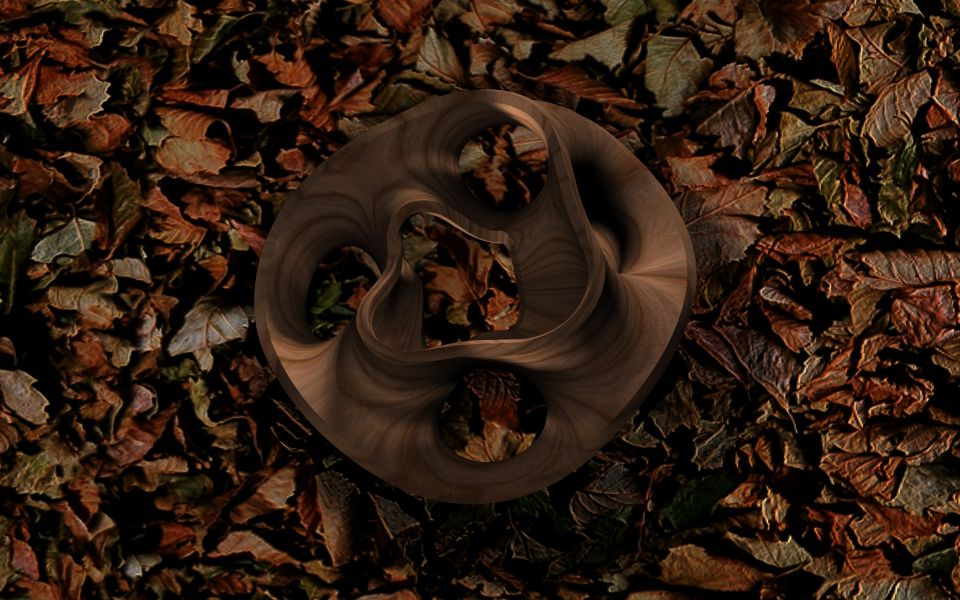
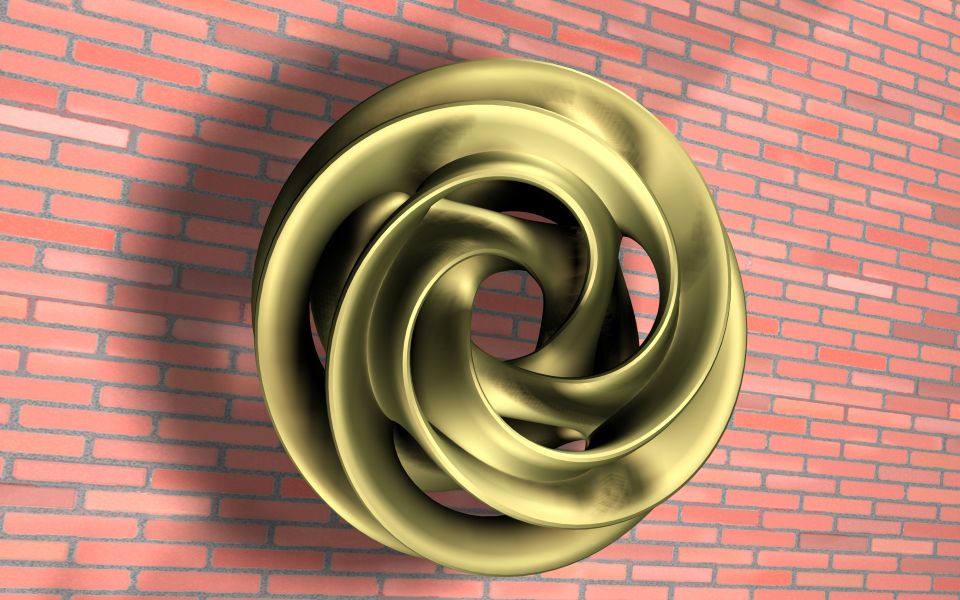
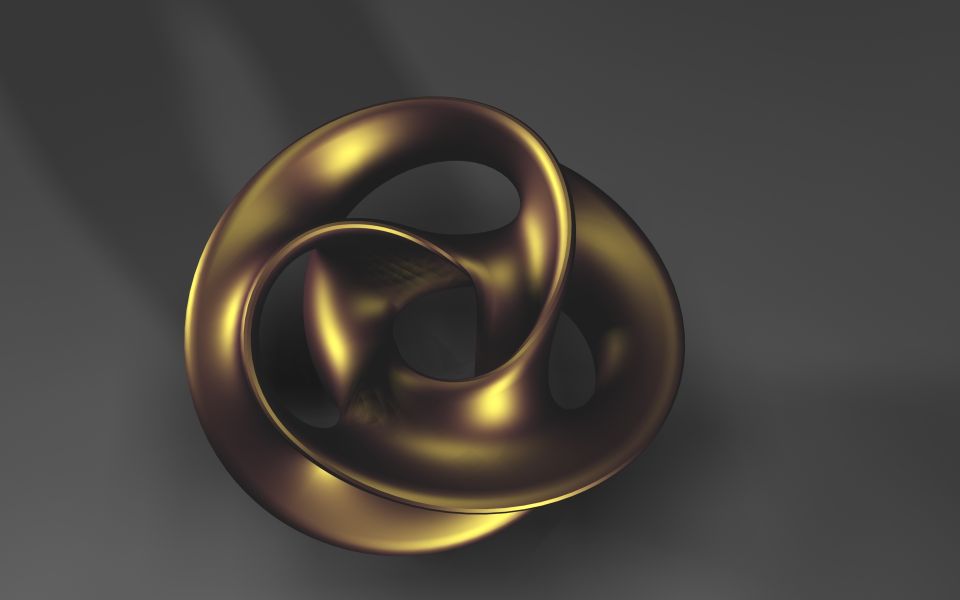
Las siguientes geometrías fueron generadas por 'Sculpture Generator 1' by Carlo H. Séquin, UC Berkeley:
 |
 |
 |
|
| "Demo from 'Sculpture Generator 1' by Carlo H. Séquin, UC Berkeley" | "Generated by 'Sculpture Generator 1' by Carlo H. Séquin, UC Berkeley" | "Generated by 'Sculpture Generator 1' by Carlo H. Séquin, UC Berkeley" (Archivo STL) Construccion |
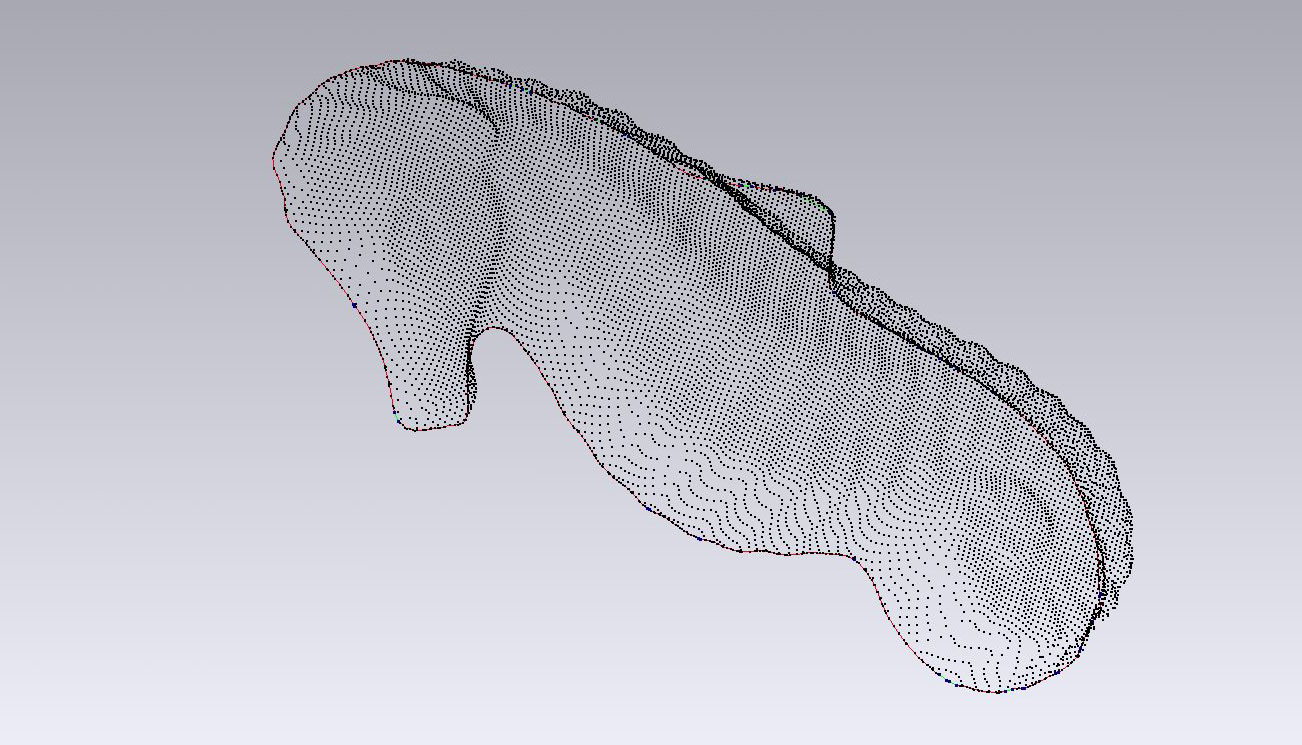
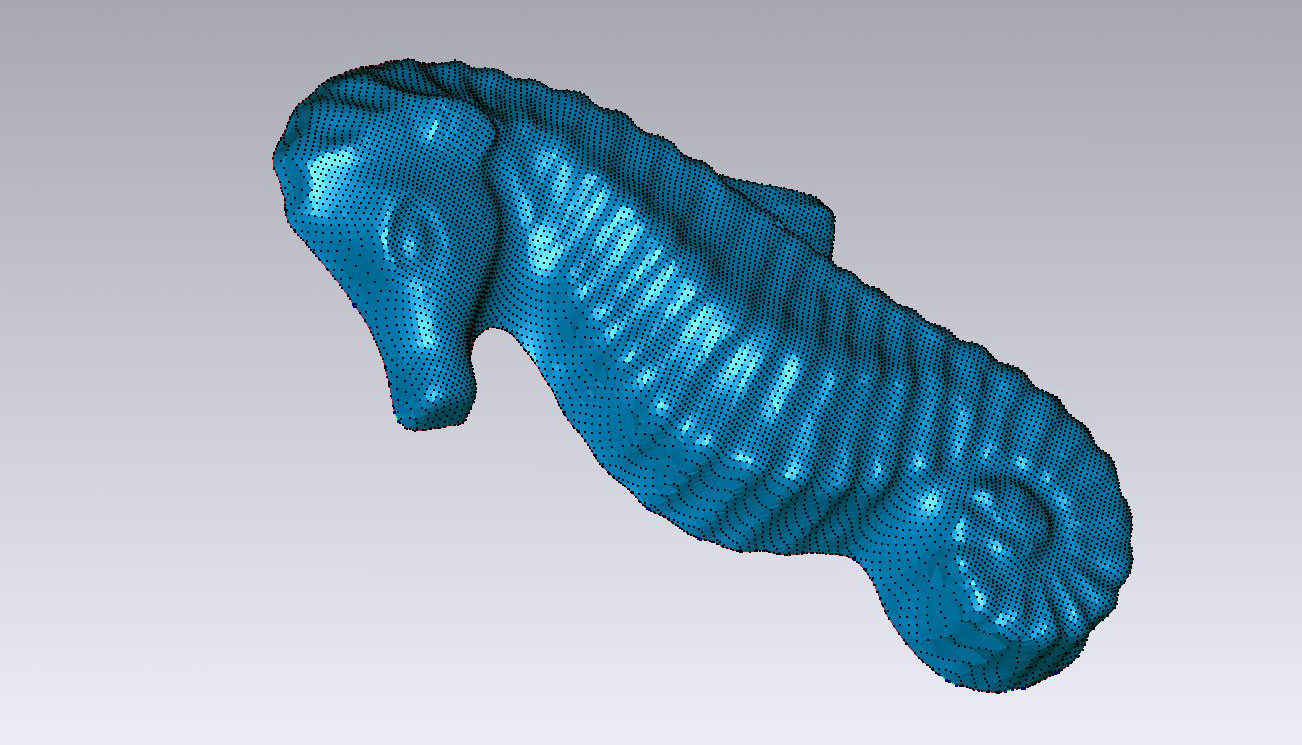
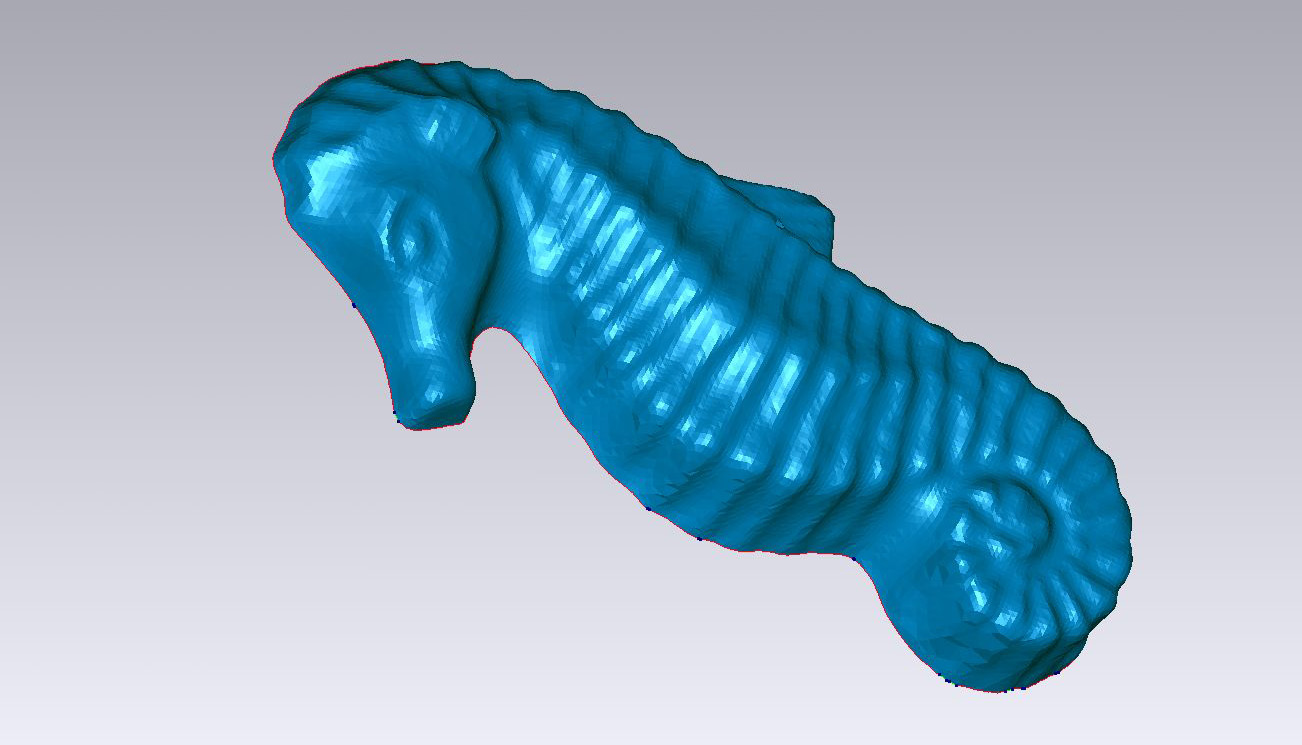
GEOMETRÍAS DE NUBE DE PUNTOS (point cloud)
 |
 |
 |
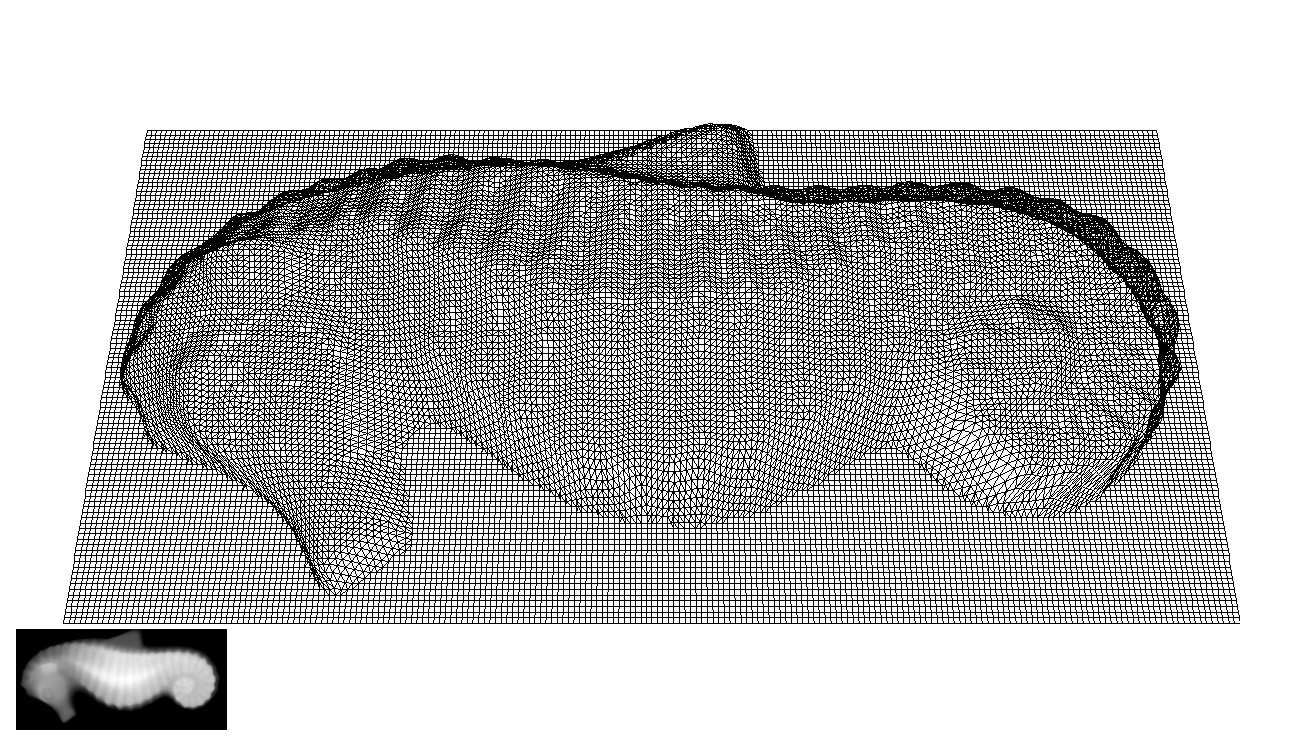 |
| Nube de puntos del caballito de mar | Nube de puntos + 3D Facets del caballito de mar | Malla de superficies del caballito de mar |
Tonos de altura del caballito de mar (archivo de puntos) |
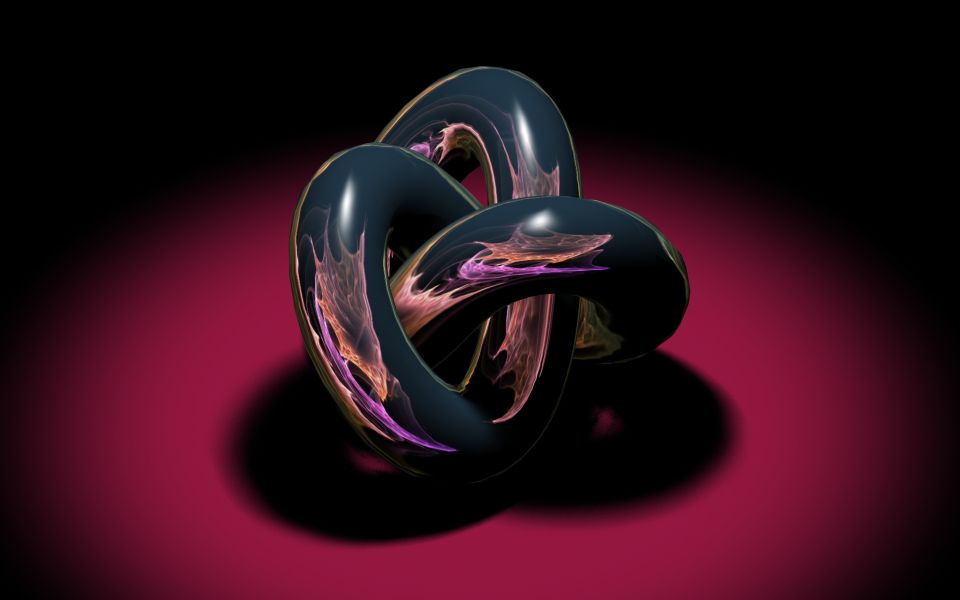
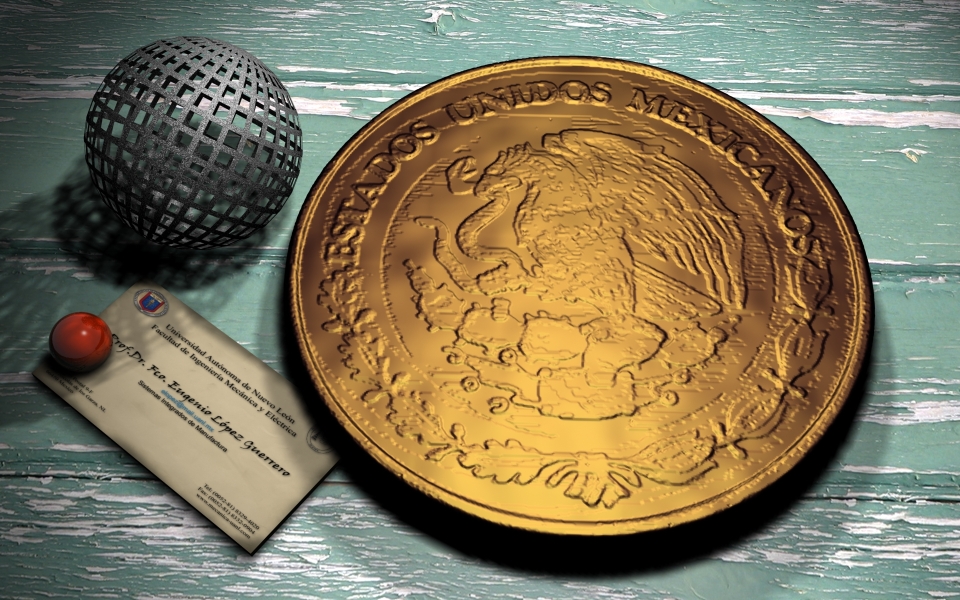
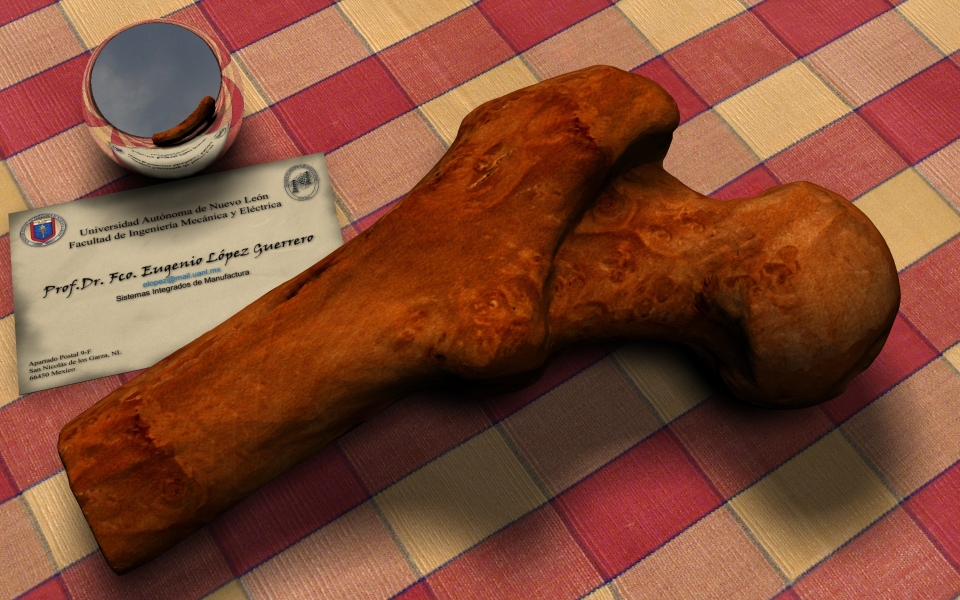
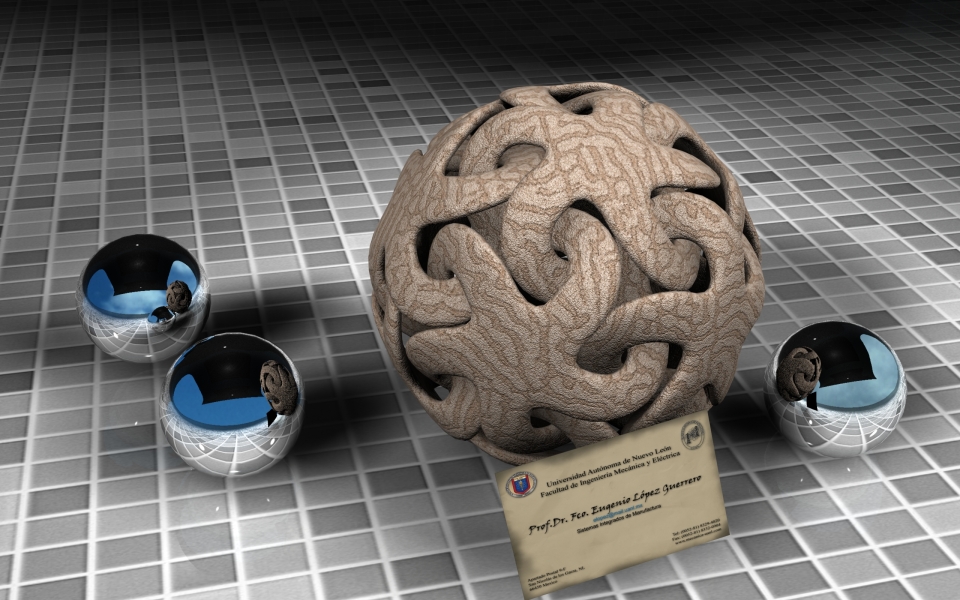
ALGUNAS OTRAS GEOMETRÍAS
 |
 |
 |
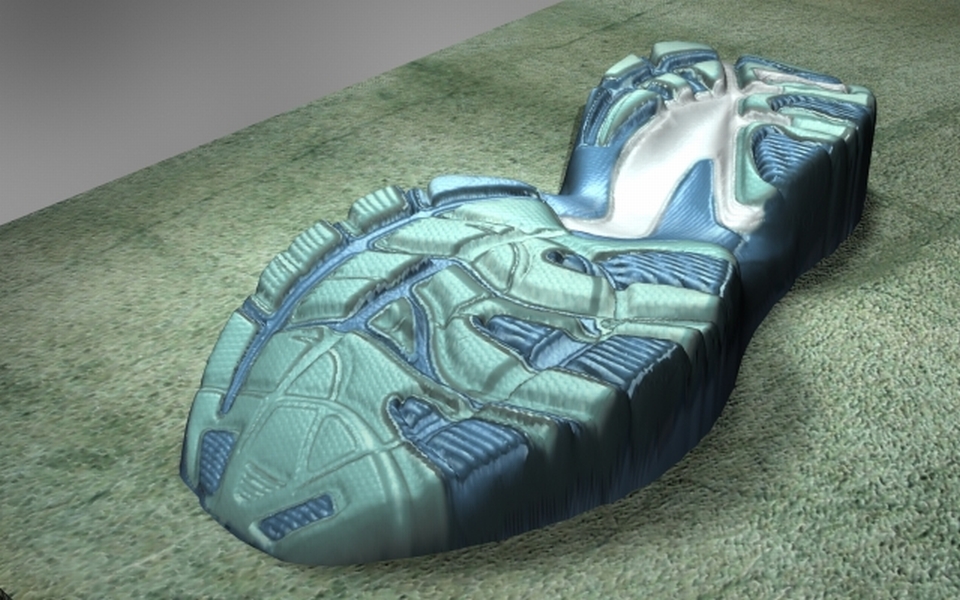 |
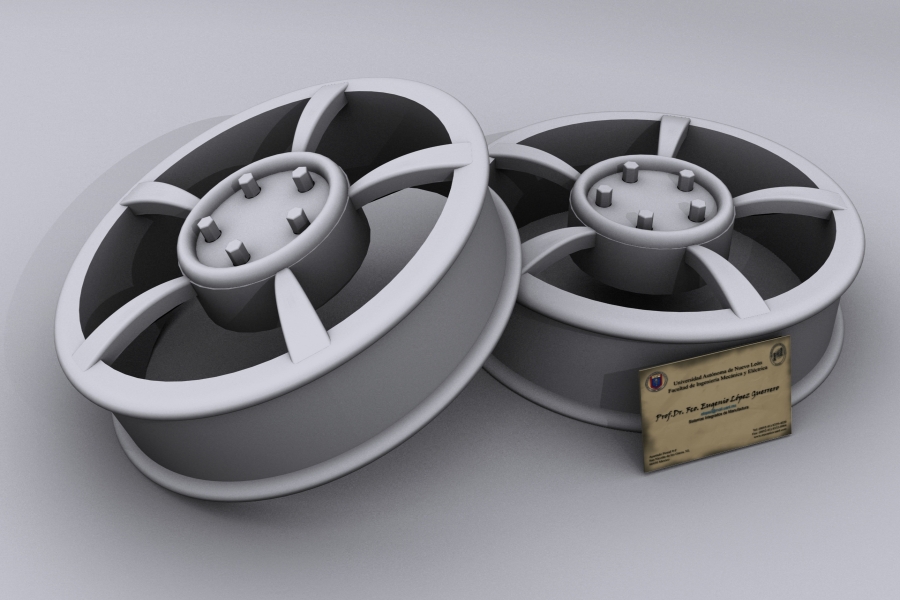
| "Generated and rendered by 3DMAX" | "Generated and rendered by 3DMAX" | Render en 3DMAX del artículo sobre biomecánica | Render en 3DMAX del artículo sobre calzado deportivo (Archivo STL) |
 |
 |
 |
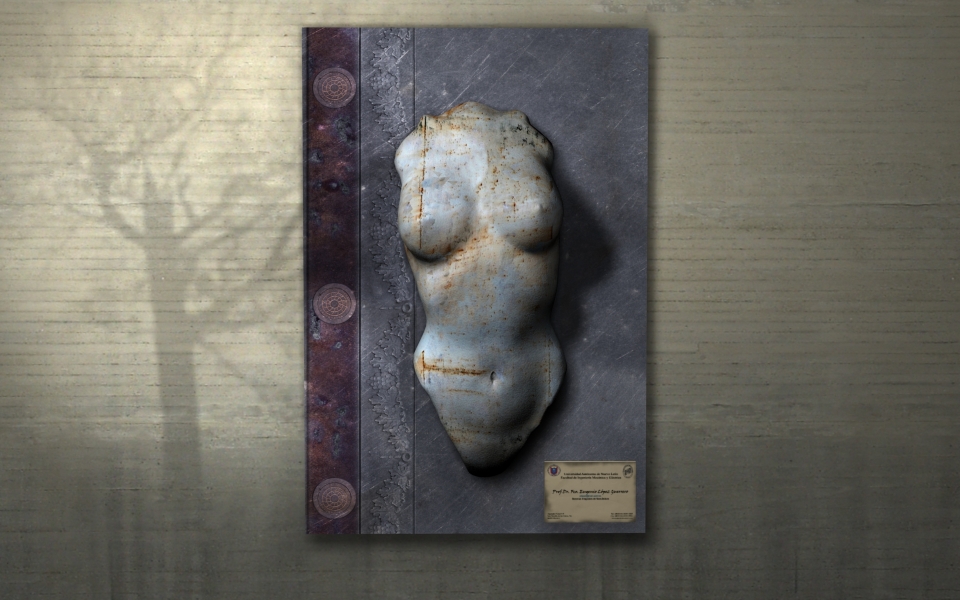 |
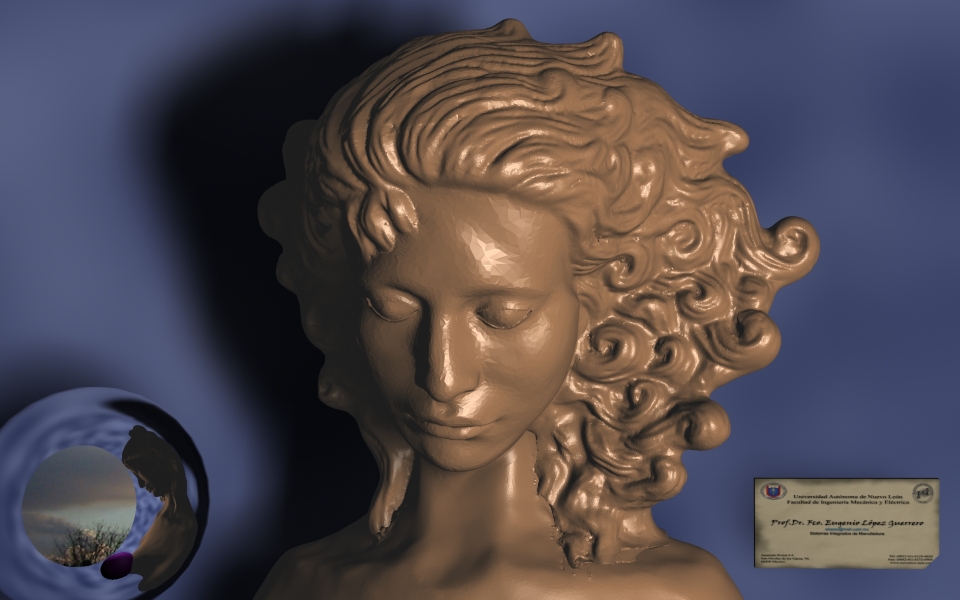
| "Generated with TopMod and rendered by 3DMAX" | Render en 3DMAX del artículo sobre estatuas | "Clay+Oclussion generated with Rhino and rendered by 3DMAX & Phtoshop" | "3D CG art test. Shadows and material maps in 3DMAX" |
 |
 |
 |
|
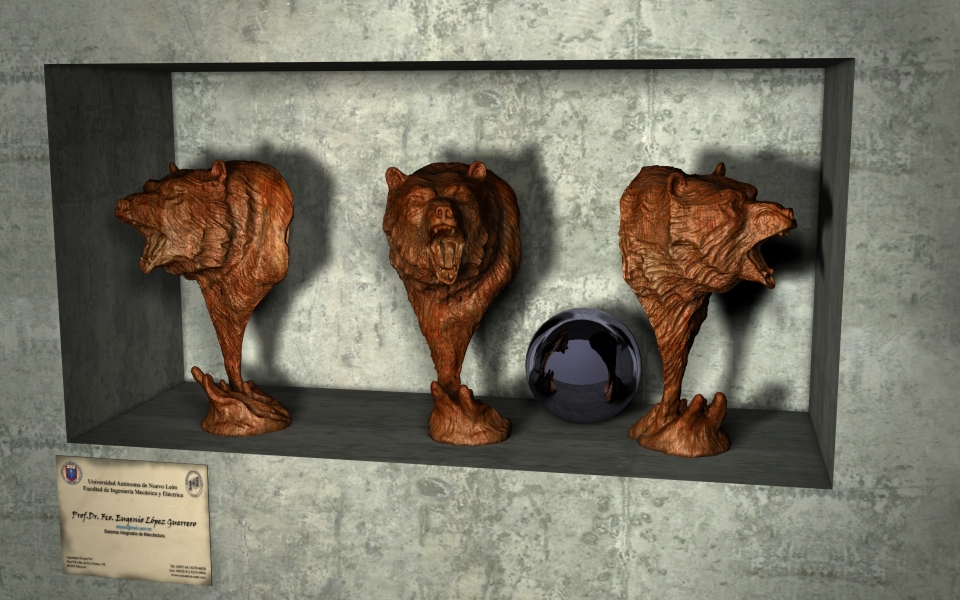
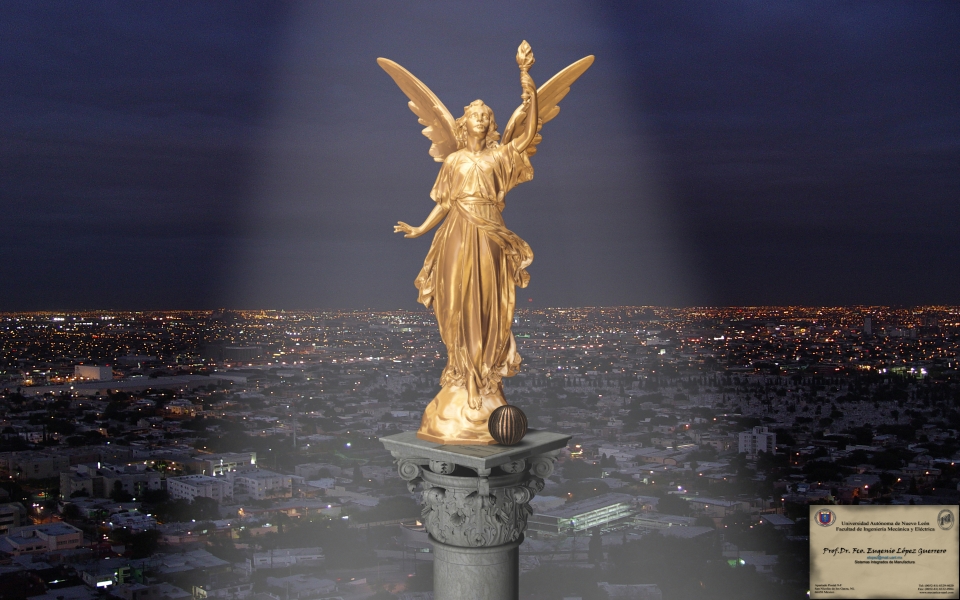
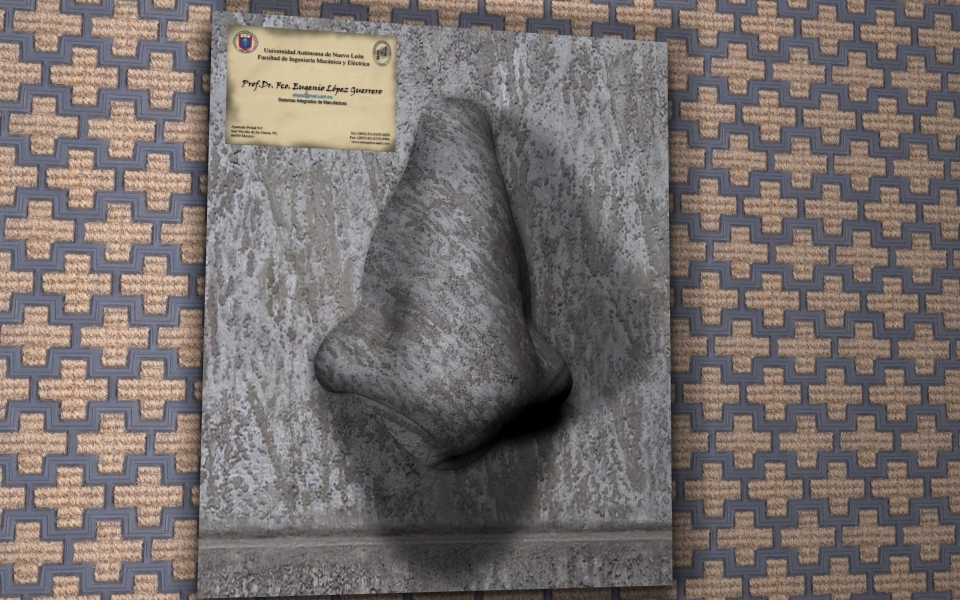
| "Render en 3DMAX oso de FIME/UANL" | "Obispado Mty and rendered angel with 3DMAX" | Render en 3DMAX del artículo sobre caracterización 3D de la nariz |
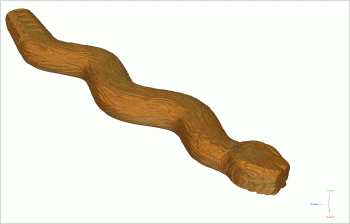
PLUG-IN CULT3D
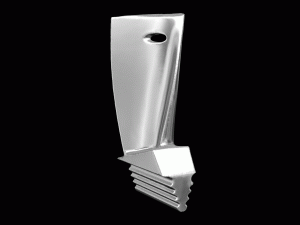
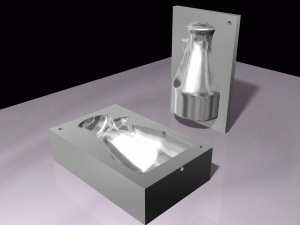
Si tiene instalado el PlugIn de Cult3D
y su browser es Internet Explorer, puede observar interactivamente con
el mouse las geometrías en 3D. Cult3D permite al usuario ver objetos
3D en tiempo real por medio de la red. Para poder hacerlo, necesita bajar (de
la página oficial) e instalar el PlugIn. Las texturas aparecen lentamente,
así que sea paciente.
 |
 |
 |
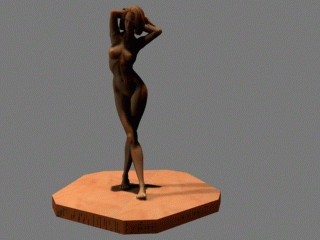 |
| ALABE. PlugIn Cult3D y navegador Internet Explorer | MOLDE DREMEL. PlugIn Cult3D y navegador Internet Explorer | SERPIENTE EMPLUMADA. PlugIn Cult3D y navegador Internet Explorer | Sera-Chan. PlugIn Cult3D y navegador Internet Explorer |